Fake DHL “Delivery Failed” Emails Are a Trap for Christmas Shoppers
Fake parcel notifications are a classic scam, especially at Christmas.

tl;dr
If you receive an email claiming DHL could not deliver a package and asking you to click a button, do not click it. These emails are scams designed to steal personal information or payment details, or to install malware on your device.
Scammers are sending out fake parcel delivery emails that falsely claim to be from DHL. These messages warn that a package could not be delivered and urge recipients to click a button to “adjust delivery preferences”.
Emails like this are especially common in the lead-up to Christmas, when many people are expecting online orders and are more likely to click without thinking.
What To Look For
The scam emails are designed to look legitimate at first glance. Common features include:
Use of the DHL logo and official colour scheme
A short, generic message such as:
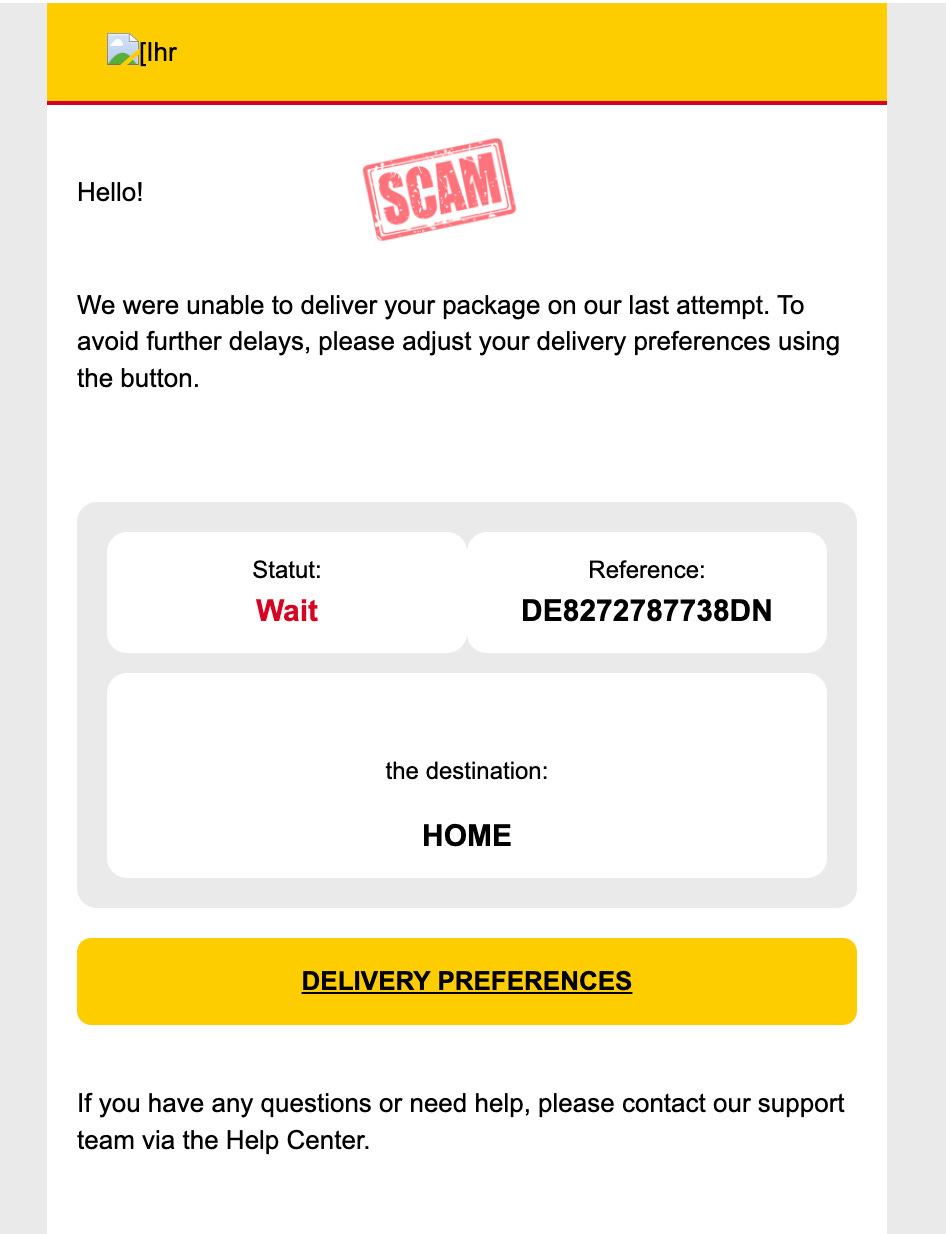
“We were unable to deliver your package on our last attempt”
A prominent button that supposedly lets you update or adjust delivery preferences
A sender address or domain that has nothing to do with DHL
The email usually does not include specific details such as your name, tracking number, or delivery address.
What Happens If You Click the Button
Clicking the button takes you to a fraudulent website controlled by scammers. From there, several things may happen:
You may be asked to enter personal details such as your name, address, and phone number
You may be asked to pay a small “redelivery” or “processing” fee using a credit card
The site may attempt to install malware on your device
Your information may be harvested and later used for identity theft or further scams
Even a small payment can give criminals enough information to commit fraud or sell your details to other scam groups.
Why These Scams Work So Well
Parcel delivery scams are effective because they exploit everyday expectations and seasonal behaviour:
Many people regularly receive deliveries and assume the message is genuine.
During busy shopping periods, such as Christmas, people expect delays or missed deliveries.
The emails create urgency by suggesting further delays if you do not act immediately.
Using the names of well-known brands like DHL lends a false sense of trust.
Scammers also know that recipients may not remember every package they have ordered, especially during sales and holiday periods.
Other Delivery Brands Are Also Impersonated
Although this version claims to be from DHL, scammers frequently impersonate other delivery companies and postal services, including:
Australia Post
FedEx
UPS
Royal Mail
Local courier companies
The wording and layout may change, but the goal is always the same: get you to click a link and hand over your information.
How to Spot a Fake Delivery Email
You can often identify these scams by looking for the following warning signs:
Generic greetings such as “Hello” instead of your name
No valid tracking number or order details
A sender email address that does not match the company’s official domain
Links or buttons that lead to unfamiliar websites
Pressure to act quickly to avoid delays or extra charges
Legitimate delivery companies typically provide tracking numbers and do not request sensitive information via email links.
What You Should Do
If you receive a suspicious delivery email:
Do not click any links or buttons.
Do not reply to the email.
Delete the message or mark it as spam.
If you are expecting a delivery, visit the courier’s official website directly by typing the address into your browser.
Check your order status using a known tracking number from the retailer.
If you entered information on a scam site, change your passwords immediately and contact your bank if you provided payment details.
Stay Alert During Peak Delivery Periods
Delivery-related scams tend to spike during holidays, sales events, and other busy shopping periods. Treat unexpected delivery messages with caution, even if they appear to come from a trusted company.
Here’s a screenshot of the scam email: