
Fake “New Direct Debit” Emails Are Targeting Bank Customers
This Bogus CommBank Email Uses Panic to Steal Your Banking Details


tl;dr
Scammers are sending fake bank alerts claiming that a new direct debit has been set up on your account. The message is designed to create panic and push you to click a link or call a number. Doing so can lead to stolen banking credentials, identity theft, and financial loss.
How the Scam Works
This phishing scam arrives as an email that appears to come from Australia’s Commonwealth Bank (CommBank). It claims that a new direct debit arrangement has been established on your account and urges you to act immediately if you do not recognise it.
A typical example:
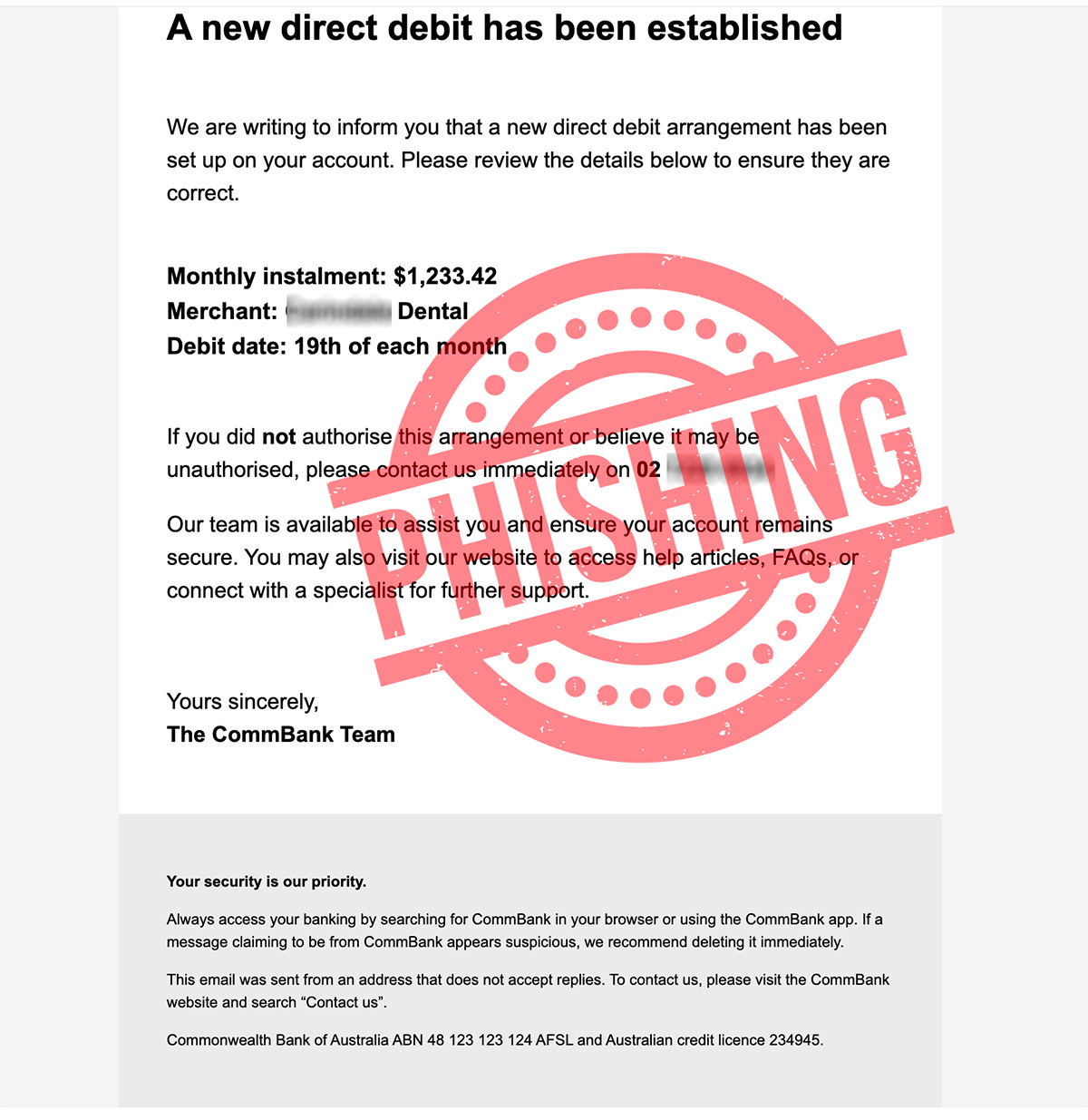
The goal is simply to make you believe money is about to be taken from your account, so that your concern overrides your caution.
Not Just a CommBank Problem
While this example impersonates Commonwealth Bank, the same tactic is used worldwide.
Scammers regularly adapt this approach to target customers of other banks, credit unions, and financial institutions. Only the branding and wording change. The term used for “direct debit” may differ depending on the country or region targeted. Regardless of terminology, the underlying scam remains the same.
Why This Message Is So Effective
The scammers deploy several well-worn psychological tactics.
Unexpected financial activity
Many people regularly use direct debits or similar transactions, so the idea that a new one might have been created seems plausible.A large, specific dollar amount
The amount looks realistic but high enough to cause alarm.A named merchant
Including a business name makes the message feel more concrete and legitimate. (The CommBank example features the name of a genuine dental clinic that had no knowledge that its company name was being used).Urgency
Phrases like “contact us immediately” are designed to stop you from thinking things through.
What Happens If You Click or Call
These emails usually lead victims down one of two paths.
Fake banking websites
Links open a site that closely imitates a real bank login page. Any details you enter are captured by criminals.Phone-based social engineering
Calling the listed number connects you to scammers posing as bank staff. They may ask for login details, one-time codes, or other sensitive information.
Once scammers have this information, they can attempt to access your real bank account, steal funds, or use your details for further fraud.
Branding Makes It Look Convincing
The emails and websites used in these scams often include:
Bank logos and colour schemes
Professional language and formatting
Sign-offs such as “The CommBank Team”
“Security Notices” and contact info in email footers and headers
None of this means the message is genuine. Such elements are easy for criminals to copy and are deliberately used to lower your defences.
How to Protect Yourself
Do not click links in unsolicited bank emails
Do not call phone numbers provided in unexpected messages
Check your account by using your bank’s official app or saved website bookmark
Contact your bank using the number in official statements or other documents.
Delete the message once you have confirmed it is fake
If you are ever unsure, pause and verify through a trusted channel. A few extra minutes can prevent serious financial damage.