
Fake Virus Warning Pop-Ups: Why You Should Never Call the Number
Scammers and Fake Virus Alerts: What Those Browser Warnings Really Mean

tl;dr
Fake virus warning pop-ups are designed to scare you into calling a “support” number.
The warnings are not real. The phone number connects you to scammers who will try to take control of your device or steal your money. Close the browser tab and run legitimate security software instead.
Overview
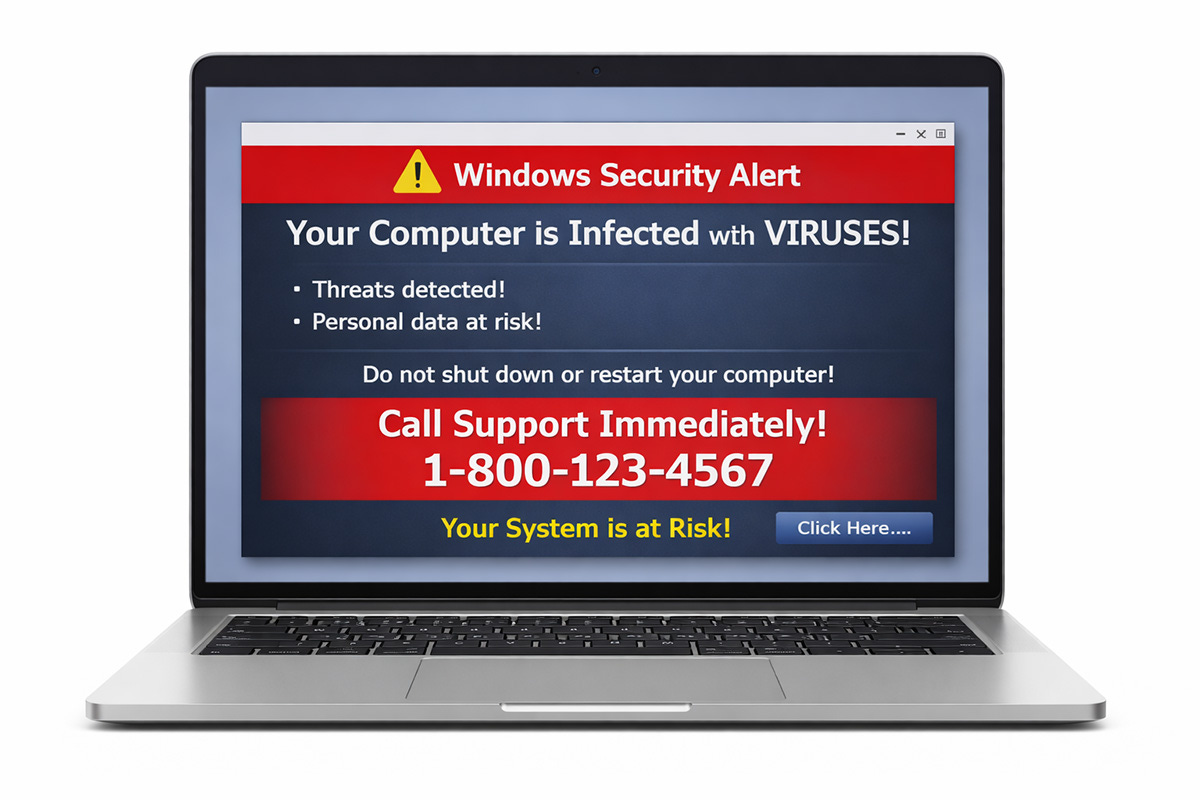
You’ve no doubt encountered them at one time or another. Those fake virus warnings that appear while you are browsing the web. They pop up out of the blue and may even take over your entire screen.
Common claims include:
“Your computer is infected with multiple viruses”
“Windows Defender has detected severe threats”
“Apple Security Alert – Immediate action required”
“Your personal data is at risk”
The pop-up often:
Uses Microsoft, Apple, or antivirus branding
Displays flashing warnings, alarms, or countdown timers
Claims your computer will be locked or wiped
Urges you to call a phone number “immediately”
These messages are not generated by your operating system or security software.
Why the Phone Number Is the Real Danger
The goal of these pop-ups is not to infect your computer directly. What the scammers really want is to get you on the phone.
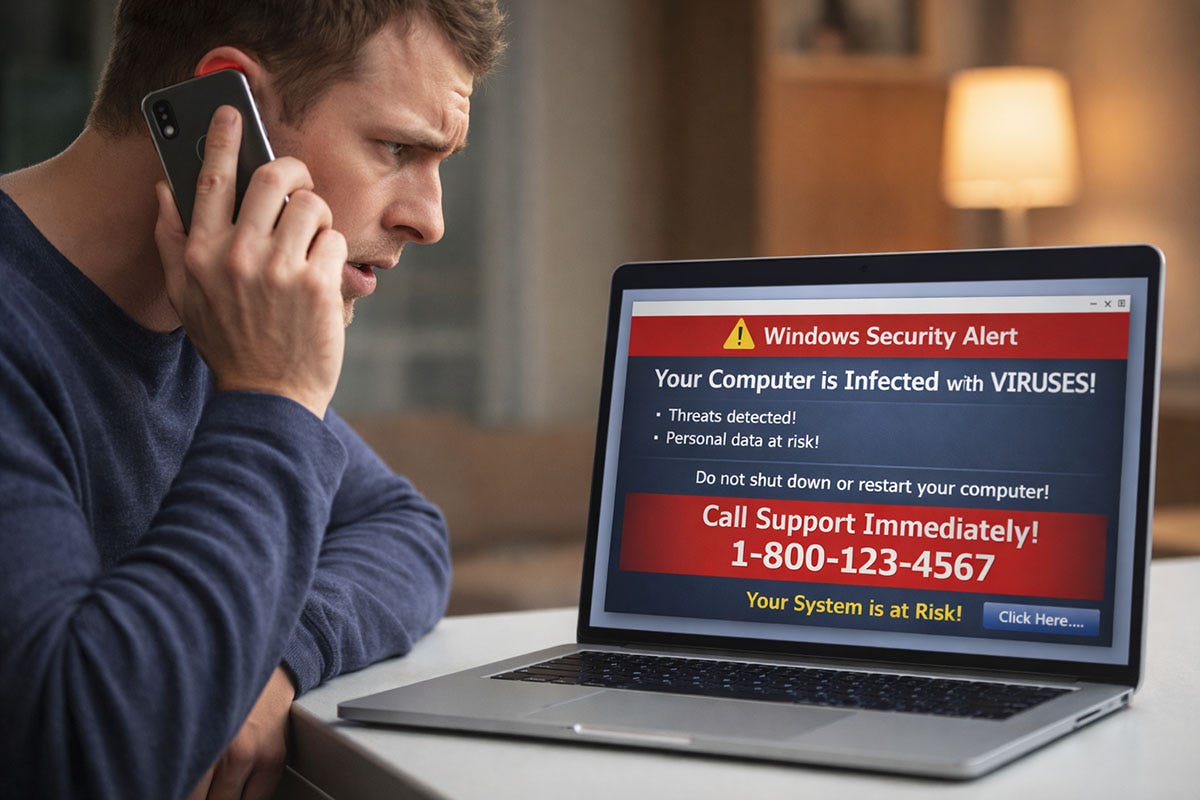
If you call the number, the scammers use various well-prepared scripts to reel you in.
They may:
Claim to be from Microsoft, Apple, or a “certified security partner”
Convince you to install remote-access software
Pretend to “find” infections on your device
Demand payment for fake repairs or subscriptions
If the scammers do gain remote access to your computer, they can then:
Steal personal and financial information
Install real malware
Lock your device and demand payment
Trick you into logging into bank or email accounts
Why These Scams Are So Effective
These scams work because they exploit fear and urgency.
Scammers rely on the fact that:
Many people don’t know how real security alerts look
The warnings appear suddenly and seem official
The language is alarming and time-critical
Calling a number feels like a “safe” next step
The more panicked a victim feels, the less likely they are to stop and question the warning.
How to Tell a Fake Virus Warning from a Real One
Fake warnings usually have at least one of these red flags:
A phone number is displayed in the alert
The message appears inside a web browser, not the system
You are told not to close the window
Poor grammar or generic wording is used
The alert appears after clicking a random ad or link
Legitimate antivirus software does not display phone numbers in pop-up warnings.
What You Should Do Instead
If one of these pop-ups hits your browser:
Do not call the number
Do not click any buttons in the alert
Close the browser tab or window (If it won’t close, use Task Manager on Windows or Force Quit on Mac)
Restart your device if necessary
Run a scan using legitimate security software
Clear your browser cache if the alert keeps reappearing
If you did call the number or allowed remote access, disconnect from the internet and seek professional help immediately.
Stay Vigilant
These fake virus warning pop-ups have been around for many years. Nevertheless, they remain highly effective and still catch many people out. Why? Because the warnings look convincing, the language is alarming, and the scammers are trained to sound helpful and authoritative.
Remember:
Real security software does not ask you to call a phone number.
When in doubt, close the browser and rely on trusted tools rather than fear-based pop-ups.
Thanks Brett. It's maddening to try and keep up with all the scams. Appreciate your work.
I was with a client back in October.
Them: Can you install my lifetime Webroot anti virus subscription for me
Me: Webroot don't do a lifetime subscription
Them: Yes they do. I bought it from Microsoft two years ago when I had a virus
Me: Are you sure?
Them: Yes I had a notification on my computer. I spoke to Microsoft on the phone. They sold me a lifetime Webroot subscription
They still had the phone number they called. We Googled it, and that number was well known for being connected with "Tech Support" scams.